

This USMNT is a unifying force. It belongs to the people, not this administration
While the current administration tries to co-opt this team for its own agenda, the USMNT stands as a unifying representation of the country at large

The USMNT has started this World Cup in historic fashion - winning their first two group-stage games and securing a berth in the knockout round before their third game. They are playing with passion, intensity, and tactics I haven’t seen from the program in quite some time. From coast to coast, from the die-hards to the casuals, so many people are jumping on board to support this team.
In a time where there is real division in the United States, and if all you consume is content from conflict entrepreneurs, it’s a division that seems irreparable and permanent, there are only a handful of things that people from all backgrounds and experiences can unify around. I have truly found this team to be one of those things. And based on conversations I’m having and hearing about, I’m not alone!
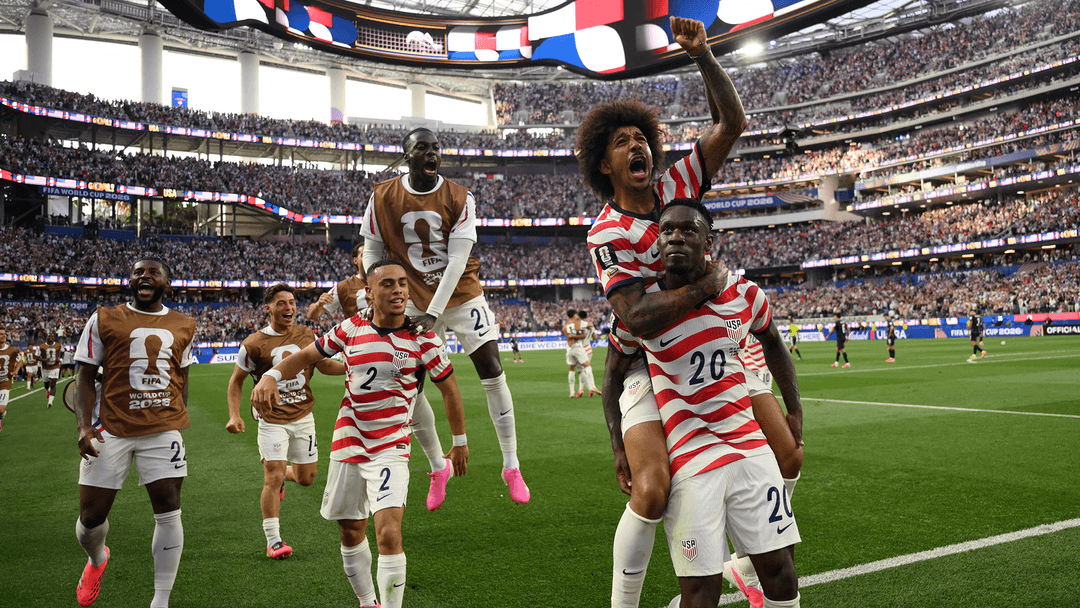
As the country works through a tumultuous season, while simultaneously hosting the greatest sporting event in the world, many of us here have cautiously held our breath, wondering how this would pan out. There have been legitimate shortcomings from the country: visa bans/denials for would-be travelling fans and delegations, the mistreatment of players, coaches, and fans upon their arrival, and the extreme over-commercialization that they have happily joined with FIFA in.
At the same time, there has been so much joy in the country as fans from across the globe (and the diasporas here in the United States) share their countries and cultures. It is creating moments that only the beautiful game can. One of the joys has also been watching this USMNT. The way they play, the way they fight, the fun they have together, and who they are.
The diversity of backgrounds and ethnicities on this team reflects the beauty of what makes the United States of America so unique. People from different walks of life are coming together to achieve something. To make something better. That hasn’t always been the story of America, but isn’t that what we claim to aspire to?
You have players who grew up in our biggest cities, and others who grew up in rural areas. The sons of military veterans, doctors, athletes, coaches, and small business owners. Players with families who recently immigrated, and those whose families immigrated several generations ago to seek a better life or to flee persecution. Players who moved to other countries themselves, and those who moved to this country. The immigration stories cannot be understated or discarded. Close to half of the players on this roster are immigrants or the sons of immigrants.
This is why I cannot sit by while certain narratives are discussed without sharing a few thoughts. This is not a piece to debate policy, that can be done in other spaces by people far more equipped than I. There has been a lot written about the effects of migration on this World Cup, from a U.S. perspective, a global one, and everything in between. I have many thoughts on those ongoing discussions, but for now, I only want to address something that the U.S. government is doing in the name of “unity” that actually does the opposite. It promotes division.
If you’re on social media (and I’m usually not; someone sent me the posts), you may have seen the Department of Homeland Security (DHS) post a few things about the USMNT lately. There was one post about “defending the homeland”, another (that seems to exist no longer) of the team in front of a border fence, that said “built the wall”.
There are a few glaring issues with this administration jumping on board to “support” this team in these ways. Their actions don’t seem to reflect the unifying power of this sport (within the country and across the globe), and their ideologies, policies, and actions are openly anti-immigrant. When it suits them, the administration uses immigrants in this country for its own image and gain. When it doesn’t, they are quick to remind others how these same people “aren’t really American.” This is problematic for a team that has been shaped so clearly by immigration.
If this current administration had its way, many of these players wouldn’t be able to play for this national team, and we wouldn’t have the joy of watching them represent the country with pride and passion. Some players come from immigrant communities that have recently been completely closed off to the country. Others have countries of origin that may not be part of current bans, but the government is actively working to reduce legal pathways for those countries. Even for the players without a recent immigration story, the government is actively looking for ways to disenfranchise some of their communities and push their stories and experiences to the margins.
Let’s take a look at a few of the examples on this team. My aim here is not to reduce these players to their immigration stories or backgrounds. They are so much more than that, and I want to be careful not to box them in with terminology that can be so divisive in discourse today. They are sons, husbands, brothers, and fathers. They are leaders, change-makers, and pillars in their communities. They each have unique personalities, interests, and skills that contribute to the team's culture. And yes, they each have an immigration story that brought them to represent the USMNT.
Folarin Balogun - He is the son of Nigerian parents (Florence and Ben) who were living in London and visiting New York City. As they attempted to travel home, the airline wouldn’t let them because his Mother was seven months pregnant with him at the time. Because he was born in the U.S., he can represent the team. He chose to represent the nation, as you’ll see in the video below. The Trump administration has been attacking birthright citizenship since the beginning. They have also placed restrictions on visitors and immigrants from Nigeria. If they had their way, kids like Folarin would not be able to play for this team.
Timothy Weah - He is the son of a Liberian father (the one and only George Weah) and a Jamaican mother (Clar). Timothy grew up here in the U.S. before moving to Europe as a teenager to pursue his dream. Despite the ability to play for other nations, he chose the U.S., saying, “The decision wasn't hard at all…This is my country, and I love it here”. This administration has suspended immigrant visa processing for both Liberia and Jamaica. If they had their way, kids like Timothy would not be able to play for this team.
Haji Wright - He is the son of a Liberian mother (Serena) and a father from Ghana, and grew up in Los Angeles. There were reports that Ghana was interested in bringing him into their team, but he has always chosen the U.S. He scored in the 2022 World Cup and is now representing the team at this World Cup. This administration has suspended immigrant visa processing for both Liberia and Ghana. If they had their way, kids like Haji would not be able to play for this team.
Cristian Roldan - He is the son of a Guatemalan father (César) and a Salvadoran mother (Ana). Both of his parents immigrated to the U.S. during the 1980s, fleeing the brutal civil wars in both their home countries. Having the opportunity to represent three different countries, he ultimately chose the U.S. You can hear more of his story below. Currently, the asylum and refugee processes, designed for people fleeing war and persecution, have been hindered or halted completely. There is also an immigrant visa ban in place for Guatemalans. If they had their way, kids like Cristian would not be able to play for this team.
Alejandro “Alex” Zendejas - He is the son of Mexican parents (Alfredo and Mónica), was born in Ciudad Juárez, Mexico, and moved to El Paso as a young child. He has become one of the best players in Mexico’s Liga MX and had to decide between representing Mexico or the U.S. He ultimately chose to represent the U.S. and has said, “I am very proud of being Mexican-American. Values from both cultures have made me the person I am today.” This administration has continued to make the legal pathways for Mexican immigrants more difficult and extend the wait times to exorbitant levels. If they had their way, kids like Alejandro would have a much more difficult time playing for this team.
Ricardo Pepi - He was born in El Paso, Texas, to Mexican parents (Daniel and Annette). Like many kids who live along the border, he spent much of his life on both sides, visiting family and friends. Similar to Alejandro, he had the opportunity to play for both Mexico and the U.S. He ultimately chose the U.S., as he explains in the video below, “Although I chose the USA, I’m still Mexican. You know, my culture at home is Mexican. But once I step foot out of my house, my culture is American. I felt like, deep in my heart, I wanted to represent the US…I’m a proud Mexican-American.” If the current administration had its way, kids like Ricardo would have a much more difficult time playing for this team.
Mark McKenzie - He is the son of an American mother (Lynette) and a Jamaican father (Mark). He has had to battle at every level of the game to get where he is now. He learned that grit from both his parents. His mother is a breast cancer survivor, and he describes her as the rock of the family. On his father, “He's probably one of the biggest inspirations of my life. He's an immigrant. He came from Jamaica with very little and earned everything he's gotten. He instilled in me a lot of that same work ethic, that same understanding of what sacrifice looks like.” As stated earlier, the current administration has suspended immigrant visa processing for Jamaicans. If they had their way, kids like Mark wouldn’t be able to represent this team.
You also have the stories of Sergiño Dest and Malik Tillman. The sons of American military servicemen and European mothers. They both grew up abroad but chose to represent the USMNT. Kenneth Dest, Sergiño’s Surinamese-American father, explained his perspective, “You’re more American if you were not born over there because you had the choice to choose and you chose America.” You also have Antonee “Jedi” Robinson, whose father (Marlon) was a naturalized American citizen and whose mother (Kelly) is English. He grew up in England, yet chose to represent the USMNT.
Outside of the immigration stories intertwined with this team, there was also something special about their last game against Australia. It was played on Juneteenth. For those outside the U.S. who may not be familiar with the holiday, it commemorates the events of June 19th, 1865, when Union troops proclaimed to enslaved people in Texas that they were free (this was more than two years after the Emancipation Proclamation declared all enslaved people free…the implementation of this order was intentionally repressed in Confederate states).
While it should be a holiday of unity in the U.S., it has become polarized around the country, thanks in part to the current administration’s attitude towards it. Last year, the president complained about there being too many non-working holidays on Juneteenth. The administration then decided to remove Juneteenth (along with Martin Luther King Jr. Day) from the National Parks’ fee-free calendar.
Despite their efforts to polarize and divide, I saw something different on Juneteenth. I saw people from across the country rally to cheer on a team with an undeniable African-American influence. I also saw players from the USMNT share the importance of the holiday and what it meant to be playing on that day.
I understand that many of you may feel I am being “too political” or that my very focus on the immigrant stories of this team is divisive in itself, and that it shouldn’t matter. You may desire we view everything through a colorblind lens, not seeing the unique differences, and just celebrating the Stars and Stripes.
While that may seem like unity, it subtly demands uniformity. The truth is, we all have different backgrounds, stories, experiences, and ethnicities. We cannot ignore that, but we can celebrate it. Rather than letting those be dividing lines, we can pursue unity across those lines. While it may be more work, unity will always be stronger than uniformity.
People may not agree with my assessment, but if you believe in something, you have to be willing to critique it and zoom out to see whether the narrative you believe holds true. That critique isn’t anti-American; in fact, I think it’s the opposite. One of my favorite artists, Jason “Propaganda” Petty, says it this way, “I don’t hate America, I just demand she keeps her promises.” This team represents something we can all rally around, an example of what America can be.
So as you root for this team, you’ll find players you identify with - it may be their background, their story, or the way they play. There will be others you may not feel a natural connection to. If that happens, lean in, learn more about them and their story. You might find that you have more in common with them than you think.
Others reading this may feel I am not going far enough in my critique. You may have a tough time supporting this team and the red, white, and blue in a time when you are angry and frustrated with the actions of this government. I can understand that, and I do think there are merits to grievances regarding this administration. Don’t take that out on this team or attribute that to these players. They are the people’s team, not the government’s.
Consider holding those frustrations in tension with supporting this group of twenty-six men who have chosen to represent the United States, warts and all. They are a group of men who reflect all corners of this country, and they are doing something special. Don’t miss out on an opportunity to be inspired by the beautiful game and this team as they look for World Cup glory on home soil.
This sport has always been political. Anytime you have a competition where athletes represent a nation and a flag, there is a lot of baggage that comes with that. If you talk to fans of any team, they experience the tension of rooting for a country in a competition where they may not agree with the current politics. Their love and passion for the team and the country supersede their thoughts on who is currently in power. Leaders come and go, but the culture and beauty of a country remain.
In these divisive times in the United States, this team and this game, however trivial it may seem at the end of the day, might be a beacon of hope. For ninety minutes each game, Americans from every state, political party, religion, ethnicity, and country of origin come together in the stands, in sports bars, in parks, in houses, to collectively cheer for something. Where else can we experience that right now?
Really great article be great to see what the future holds for Pepi in club football great to see you in the community
Thank you for sharing. Very informative on our hero’s backgrounds. I want to enjoy how much people from within and outside our borders actually love our country as a result of the World Cup being hosted in a land of such great opportunity and freedom
By the grace of God I was born in the USA and have traveled elsewhere to realize how fortunate I am. I won’t let people in the media convince me otherwise.
I have also been blessed to have played and more importantly coached for over 60 years and witnessed how this sport can be a unifier.
I love this team.
I love this game
I love this country
Go 🇺🇸